
The recent stir created by a Malaysian influencer marketing lab-grown diamonds as natural has ignited a local debate on business integrity and product transparency. Beyond consumer rights, this incident inadvertently spotlights a deeper, broader question in the diamond industry: what truths lie beneath the “eternity” we so cherish, and how can scientific advancements guide us toward a more transparent and responsible future?
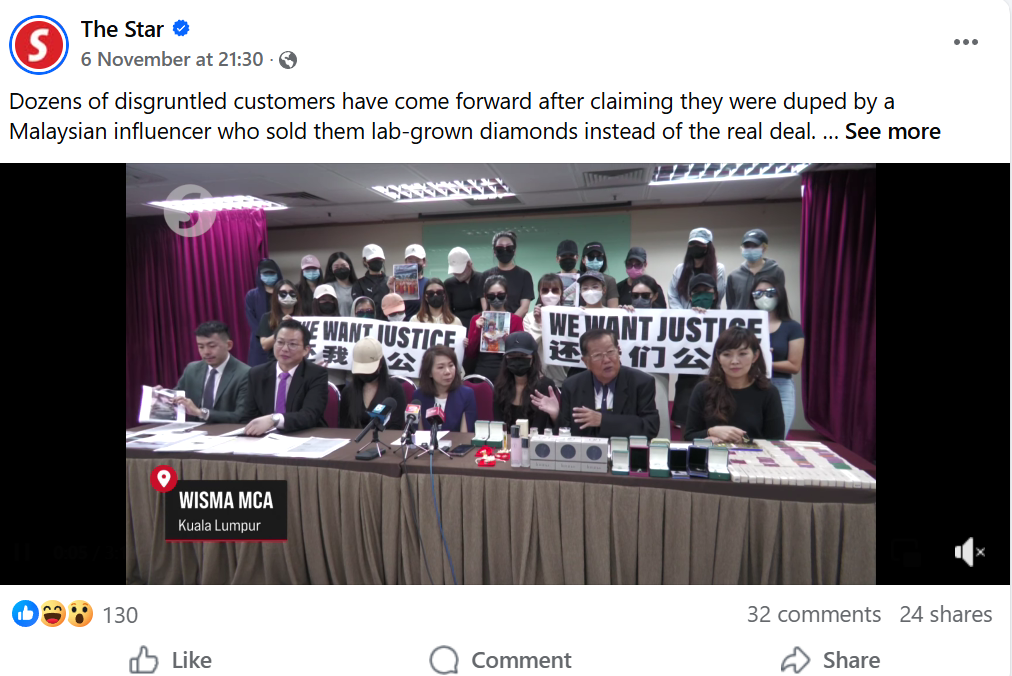
Today, let’s use the attention this incident garnered to cut through the haze of diamond marketing, uncover the true story of natural diamonds, and explore the ethical beacon that lab-grown diamonds offer.
1. Not So Rare After All: The Diamond “Myth” and the Market’s Invisible Hand
First, let’s confront a truth often conveniently sidestepped: diamonds aren’t nearly as rare as we’ve been led to believe.
Geologically speaking, the Earth holds a substantial bounty of diamonds. Yet, for decades, we’ve perceived them as an incredibly rare luxury, commanding exorbitant prices. This perception, however, owes much to deliberate market manipulation and masterfully crafted marketing strategies behind the scenes.
In the 20th century, a company that once dominated the global diamond supply strategically controlled output and launched brilliant advertising campaigns, successfully elevating natural diamonds beyond a mere commodity to an “emotional symbol.” The iconic slogan “A Diamond Is Forever” cleverly intertwined diamonds with love, marriage, and undying commitment. They convinced the public that a diamond wasn’t just another gemstone, but an integral part of courtship and marital bliss. By continuously emphasizing the diamond’s “eternal” value, this marketing genius subtly discouraged resale, effectively stabilizing prices and protecting profit margins in the primary market.
However, the “indestructible” quality merchants often extol isn’t entirely true. While diamonds boast extreme hardness (making them scratch-resistant), they also possess significant brittleness. A sharp blow from the right angle can certainly chip or shatter them – a subtle contrast to their “unbreakable” image.
Disclaimer: This article aims to provide industry insights and market analysis, not to endorse or criticize any specific brand or company.
2. The Bleak Elegy of Blood Diamonds: Humanity’s Cost Behind the Sparkle
Beneath the dazzling facade, the natural diamond industry has a dark history. The 2006 film Blood Diamond vividly brought the grim reality of “conflict diamonds” to the big screen, showing the world how diamond mining fueled African conflicts, forced labor, child soldiery, and severe human rights abuses.
And this isn’t ancient history. A deep-dive article in the Rutgers Business Review, “Modern Slavery in the Diamond Jewelry Business: How Can Science Combat It?“, reveals that modern slavery remains rampant today, a harsh global reality. In 2021, nearly 49.6 million people worldwide were trapped in modern slavery, with children and women disproportionately affected, ensnared in forced labor, debt bondage, forced marriage, involuntary servitude, and human trafficking.
In the natural diamond supply chain, this exploitation is particularly stark, with “blood diamonds” being among the most harrowing examples. These tragedies, once concentrated in Central and West African diamond-producing regions, turned resource-rich lands into living hells:
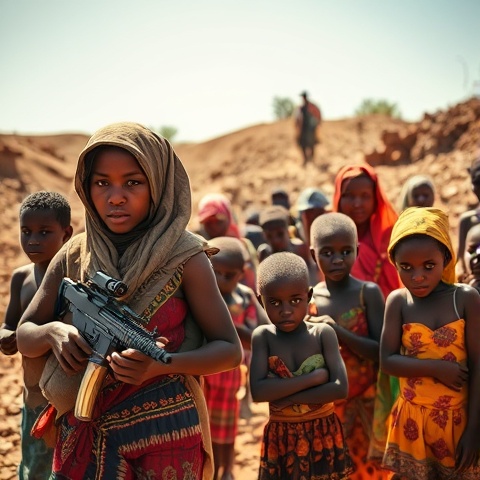
- Fueling Conflict: “Blood diamonds,” or “conflict diamonds,” are gems mined in war zones and sold to finance armed conflicts. This trade provided crucial funding for rebel groups, allowing them to control mines, illicitly sell diamonds, and purchase weapons and supplies, thereby prolonging and intensifying brutal civil wars.
- Unspeakable Atrocities and Human Rights Crises: In these mining regions, prisoners of war, innocent civilians, and even children were forced into perilous, inhumane diamond extraction. They faced violence, abuse, starvation, their lives deemed worthless. History is scarred by countless horrific acts, including limbs savagely severed, child soldiers trained as killing machines, and families torn apart by conflict. Resource-rich lands became fields of misery. Behind “blood diamonds” lie severe forced labor, child exploitation, sexual abuse, and large-scale human rights violations that deeply offend human conscience and violate international law.
Beyond these direct conflict-related brutalities, broader forms of modern slavery are also prevalent in the natural diamond supply chain:
- Hazardous Mining Conditions: Many diamond mines, especially artisanal and small-scale open-pit operations, offer extremely harsh working conditions. Miners often toil without adequate protection, risking cave-ins, infectious diseases (like malaria), and asbestos exposure.
- Child and Forced Labor: Economic hardship and a lack of alternative livelihoods force many families to send children to work in mines. These children are denied education, suffer abuse, and face the risk of trafficking.
- Debt Bondage and Zero Bargaining Power: Miners often fall into inescapable debt, compelling them to accept exploitative work terms. They have no leverage, forced to sell diamonds at rock-bottom prices or face extortion by middlemen.
- Opaque Supply Chains and Regulatory Gaps: The natural diamond supply chain is notoriously long and opaque, crossing multiple countries and numerous intermediaries from mine to consumer. This complexity makes tracing a diamond’s true origin incredibly difficult. While the international community launched the Kimberley Process (KP) to curb conflict diamonds, its narrow definition (focusing only on diamonds financing rebel groups) and enforcement loopholes mean it struggles to address broader modern slavery issues. Many remain skeptical of its effectiveness, viewing it more as a “convenient fiction” for buyers and sellers.
3. The Beacon of Science: Lab-Grown Diamonds Bring Ethical Transformation
Yet, human ingenuity always finds a way forward. As the luster of natural diamonds dimmed under the shadow of “blood diamonds,” scientific progress brought new hope – Lab-Grown Diamonds.
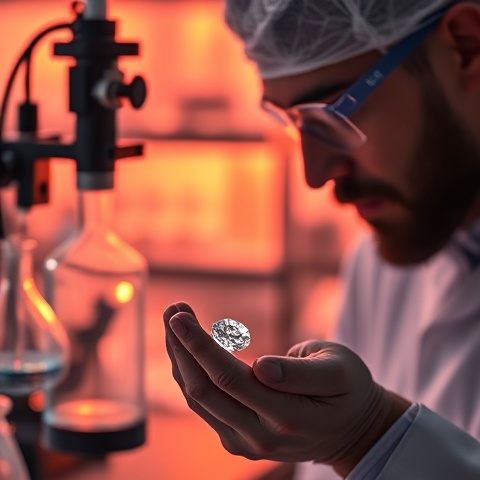
Lab-grown diamonds are not imitations; they are created using cutting-edge technology that simulates the natural diamond formation environment (High-Pressure/High-Temperature or Chemical Vapor Deposition) to grow in a short timeframe. Their chemical composition, crystal structure, optical, and physical properties are identical to naturally mined diamonds. The sole difference lies in their origin: one forged deep within the Earth over billions of years, the other cultivated in a controlled, transparent laboratory.
The emergence of lab-grown diamonds has sparked a transformative ethical shift in the diamond industry:
- Conflict-Free & Slavery-Free: Lab-grown diamonds are produced in transparent, traceable lab settings. This fundamentally eliminates risks like forced labor, child labor, and funding conflicts associated with traditional mining. Every lab-grown diamond embodies pure scientific spirit, free from human suffering.
- Eco-Friendlier: Compared to the significant ecological footprint of natural diamond mining, lab-grown production drastically reduces harm to land, water resources, and biodiversity, and generally has a smaller carbon footprint. This makes them a more sustainable choice.
- Greater Transparency: The origin of lab-grown diamonds is clear and traceable. Combined with modern tech like blockchain, full “seed-to-store” tracking is possible, allowing consumers to know their diamond’s journey.
- More Accessible Luxury: Due to lower production costs, lab-grown diamonds are typically more attractively priced than natural diamonds of comparable quality. This makes high-quality diamonds accessible to a broader audience, expanding the reach of luxury.
SustainaBear Solution believes lab-grown diamonds represent not just a technological feat, but an ethical leap forward. They offer a chance to redefine “eternity”: a brilliance that symbolizes not only love but also humanity’s pursuit of fairness, ethics, and a sustainable future.
4. A Responsible Future: Finding Balance & Empowering Change
The world isn’t simply black and white, and change doesn’t happen overnight.
While highlighting the ethical benefits of lab-grown diamonds, we don’t advocate for entirely abandoning natural diamonds. Their mining and trade are a critical economic lifeline for millions in many regions (especially Africa). Abruptly cutting off demand for natural diamonds could unleash new economic shocks and humanitarian crises on these vulnerable communities, pushing those already struggling further into hardship.
Moreover, from a deeper scientific and humanistic perspective, natural diamonds still hold unique, currently irreplaceable value that lab-grown diamonds cannot fully replicate:
- Earth’s Deep “Time Capsule”: According to authoritative geoscience research, natural diamonds, formed under extreme heat and pressure deep within the Earth’s mantle over billions of years, are direct products of our planet’s deep history. The tiny inclusions and unique crystal structures they contain serve as invaluable “time capsules” or “mantle probes” for scientists studying Earth’s internal structure, mantle composition, and evolutionary history. Lab-grown diamonds, with their controlled and rapid formation, cannot replicate this one-of-a-kind geological record.
- Frontier Science & Industrial Applications: In cutting-edge quantum physics and materials science research, both natural and lab-grown diamonds play crucial roles. However, due to their billions of years of complex geological formation, natural diamonds may offer unique value that lab-grown diamonds currently struggle to fully replicate in terms of certain specific crystal defects (such as naturally formed unique nitrogen-vacancy NV-center configurations) or special isotopic ratios. This means natural diamonds still hold irreplaceable scientific significance in frontier research demanding extreme precision and unique natural micro-characteristics, such as quantum computing, high-sensitivity quantum sensing, and ultra-hard materials research.
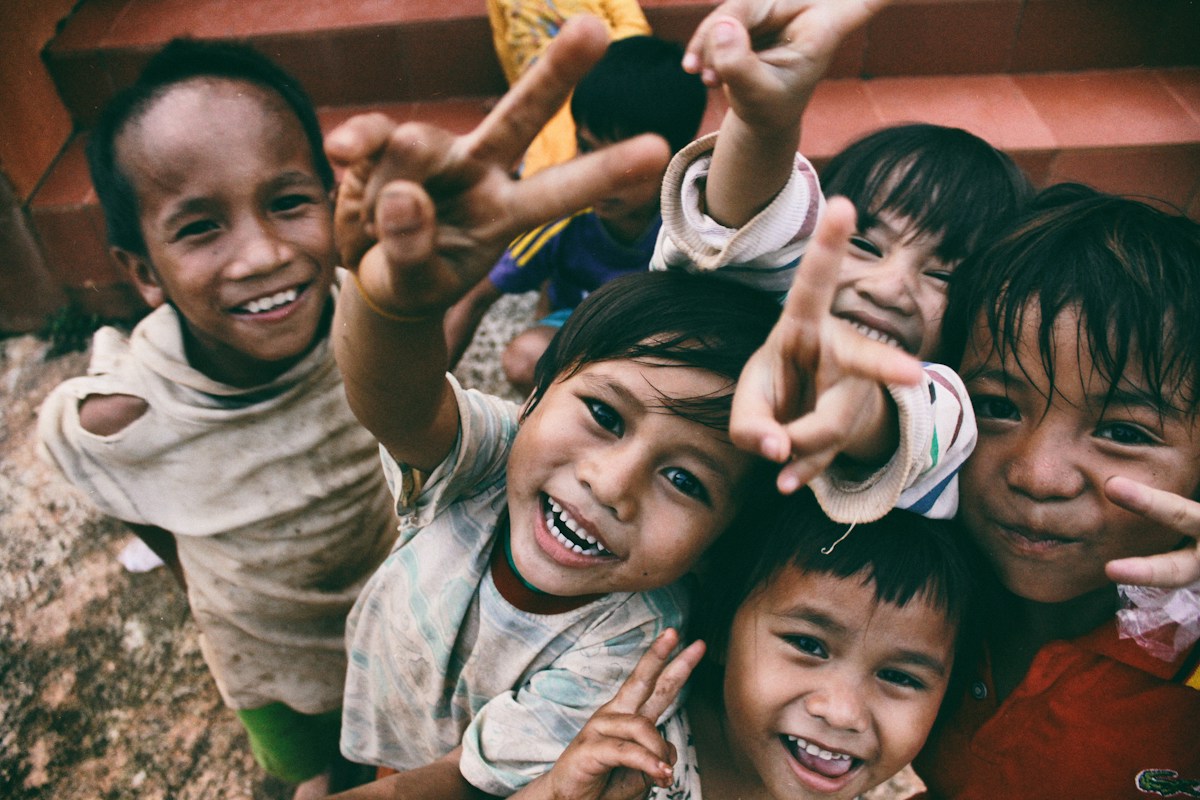
5. Implications for Malaysian SMEs: Vigilance & Responsibility in Your Supply Chain
Perhaps you believe the complexities of the global diamond industry are far removed from Malaysian Small and Medium-sized Enterprises (SMEs). However, this influencer controversy, the tragedy of blood diamonds, and the rise of lab-grown diamonds all offer profound lessons for all Malaysian businesses, especially SMEs:
In today’s highly interconnected global economy, no business can truly operate in isolation. Supply chains are complex and intertwined, and issues like modern slavery, environmental damage, and unfair labor practices can exist in various forms within your raw material sourcing, manufacturing, subcontractors, or even deeper within your partner networks.
For Malaysian SMEs, understanding and safeguarding against modern slavery is not just an ethical responsibility, but a cornerstone of business resilience:
- Mitigate Reputation Risk: Just as the influencer incident damaged a brand’s image, if unethical or illegal practices are found in your supply chain – whether you were aware or not – it will severely damage your company’s reputation, potentially leading to customer loss and partner mistrust.
- Ensure Market Access: International buyers and large corporations, especially in European and US markets, are increasingly scrutinizing suppliers’ ESG (Environmental, Social, and Governance) performance. Conducting due diligence on your supply chain to ensure it is free from modern slavery risks will be a fundamental requirement for expanding internationally or becoming a major corporate supplier.
- Meet Compliance Challenges: Globally, more and more countries are enacting mandatory supply chain due diligence laws. While Malaysia may not yet have such stringent regulations, global trends suggest compliance requirements will only increase, making proactive preparation a significant advantage.
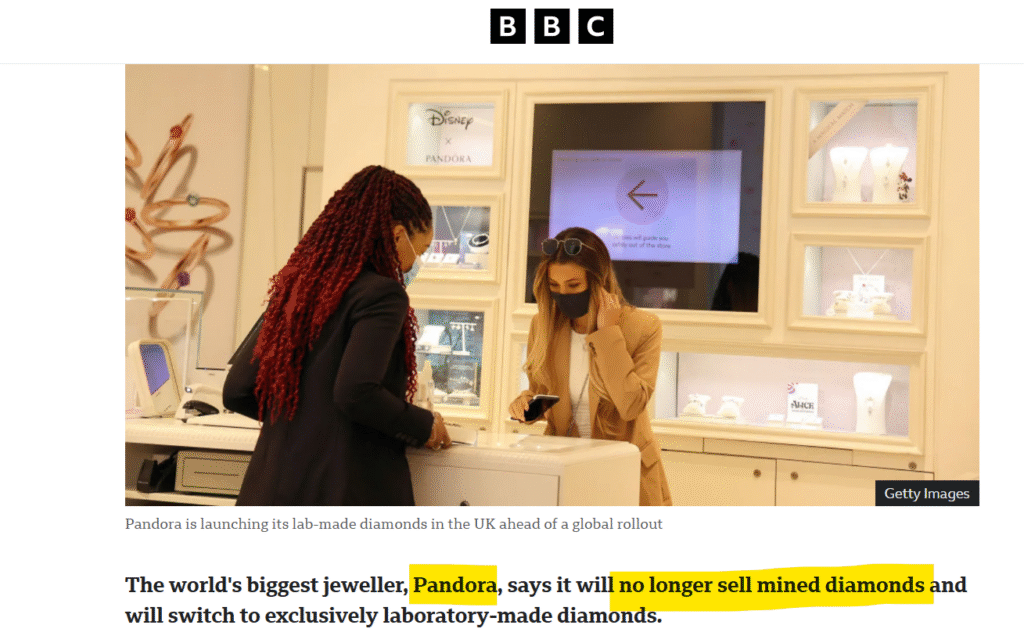
- Enhance Business Value: A transparent and responsible supply chain not only reduces risks but also boosts a company’s brand image and consumer trust, attracting more customers and investors who prioritize sustainability. Pandora, the Danish international jeweler, perfectly exemplifies this trend: in 2021, it announced a complete halt to selling mined diamonds, transitioning exclusively to lab-grown diamonds to explicitly reject “blood diamonds” and related ethical concerns. This move not only cemented its reputation as a responsible brand but also garnered positive market and investor reactions.
SustainaBear Solution is dedicated to helping Malaysian SMEs navigate and manage risks in complex global supply chains. We provide AI-powered in-depth analysis and comprehensive bilingual support to help you examine your supply chain, identify potential modern slavery and other ESG risks, and establish responsible procurement and operational systems that meet international standards and are practically feasible.
Conclusion: Let “Eternity” Sparkle with Ethics and Transparency
From the “myth of rarity” to the tragedy of “blood diamonds,” and now to the scientific enlightenment offered by lab-grown diamonds, we see an industry constantly reflecting and evolving. As consumers, we have the power to demand higher transparency and stricter ethical standards. As businesses, we have a responsibility to ensure that our products, whether dazzling diamonds or everyday goods, uphold human dignity and respect for our planet.
SustainaBear Solution believes that true “eternity” doesn’t stem from artificial scarcity or suffering. It should shine brightly through principles of ethics, transparency, and responsibility, bringing genuine value and hope to all.
SustainaBear’s consultant has spent over 20 years on the client side—leading responsible procurement and ESG compliance for both global MNCs and Malaysian SMEs. That means we understand what works in practice, not just on paper. From modern slavery risks to carbon reporting and inclusive spend, we help you meet ESG expectations with clarity, realism, and audit-readiness—without the overwhelm. Contact SustainaBear for expert guidance tailored to your business needs. Let’s build a sustainable future, together.